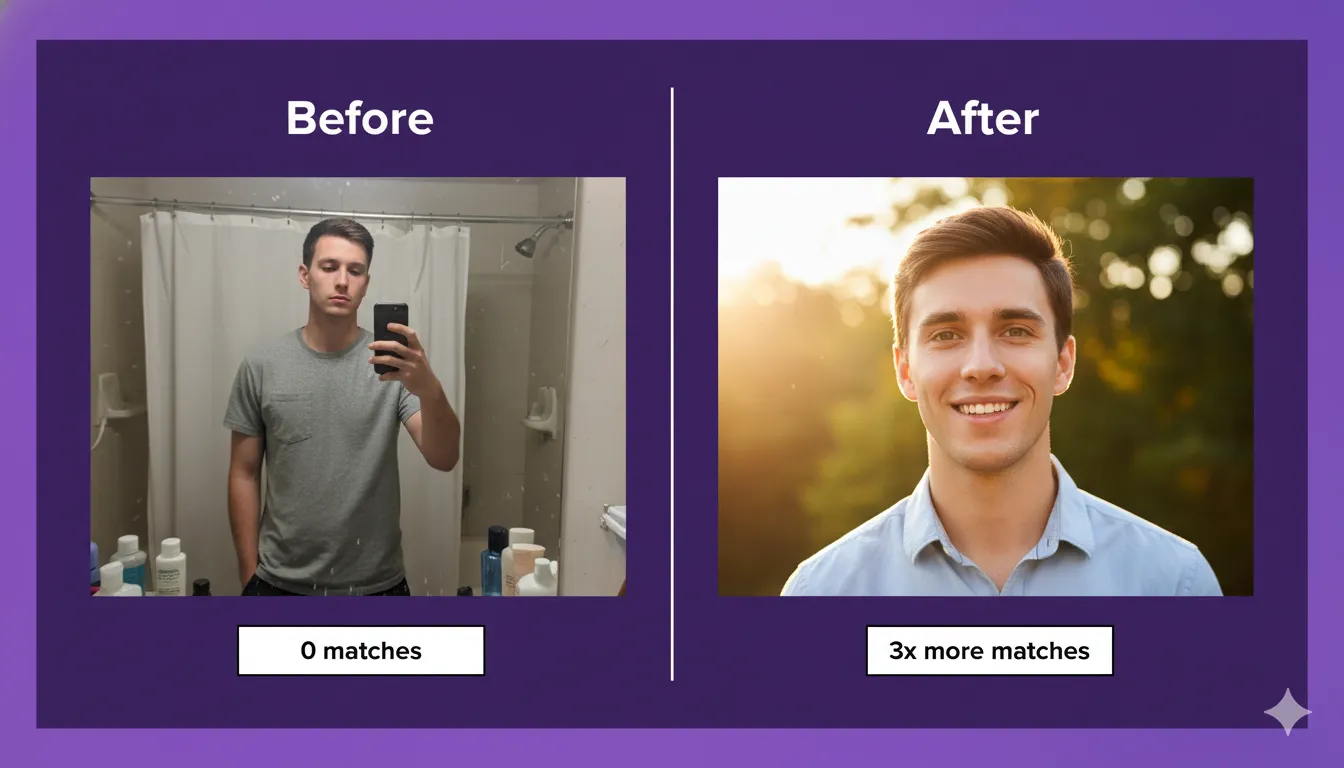
Let's be brutally honest about how online dating actually works. You can spend three hours crafting the perfect, witty bio. You can perfectly calibrate your Hinge prompts. You can list your impressive job title and your 6'1" height. But none of it matters if your first photo fails the 1.7-second test.
Research indexed by the National Center for Biotechnology Information points to an uncomfortable truth: first impressions of a dating profile form in a matter of seconds. That is not enough time to read your bio. It is barely enough time to process your name. The decision is being driven largely by the fast, automatic part of the brain scanning your primary photo for signals of safety, warmth, and approachability.
If you are not getting the matches you want, your photos are the most likely place to look first — they are the first thing anyone sees, and the easiest thing to fix. Photography is not magic; it is a system of lighting, angles, and psychology.
This guide draws on published research and on BestPick's own scored dataset — not on proprietary platform data, which none of these companies publish. We are going to break down exactly what works, what is quietly destroying your match rate, and how to build a 6-photo lineup that practically forces people to swipe right.
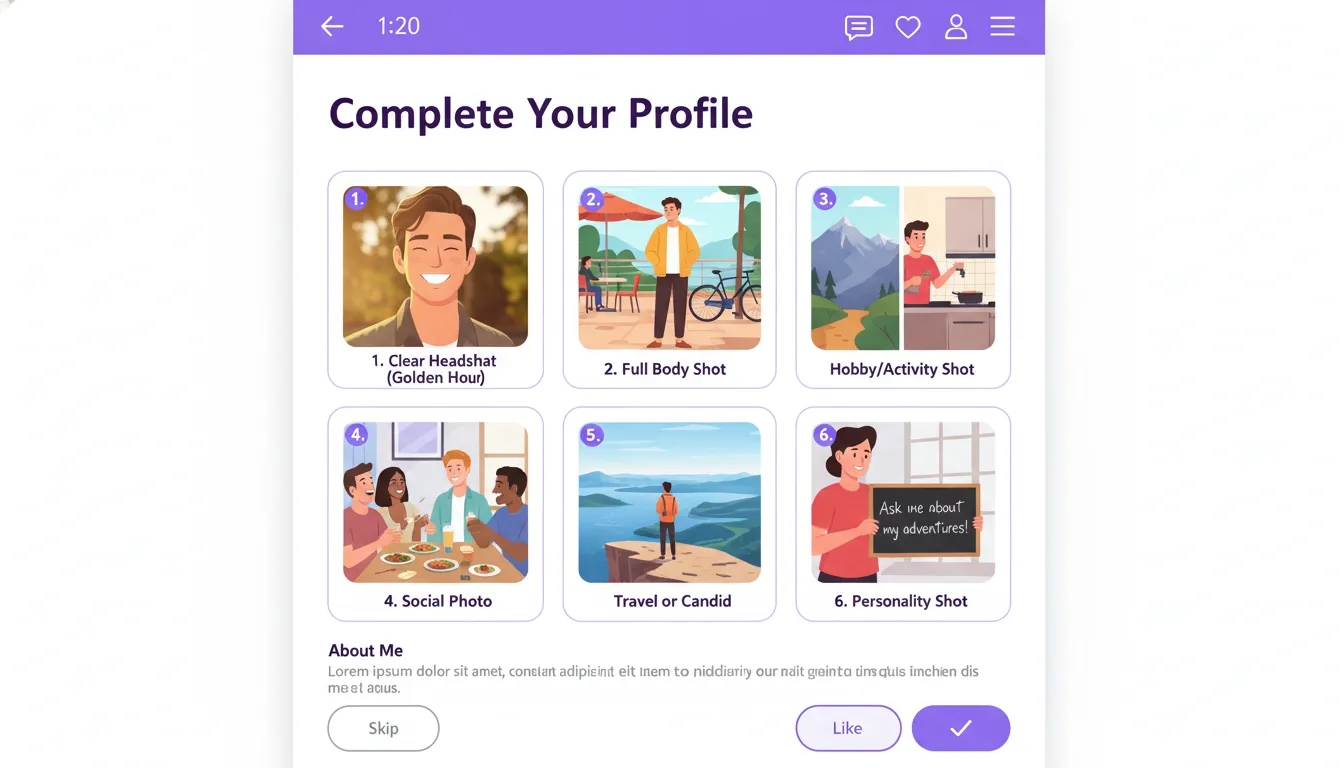
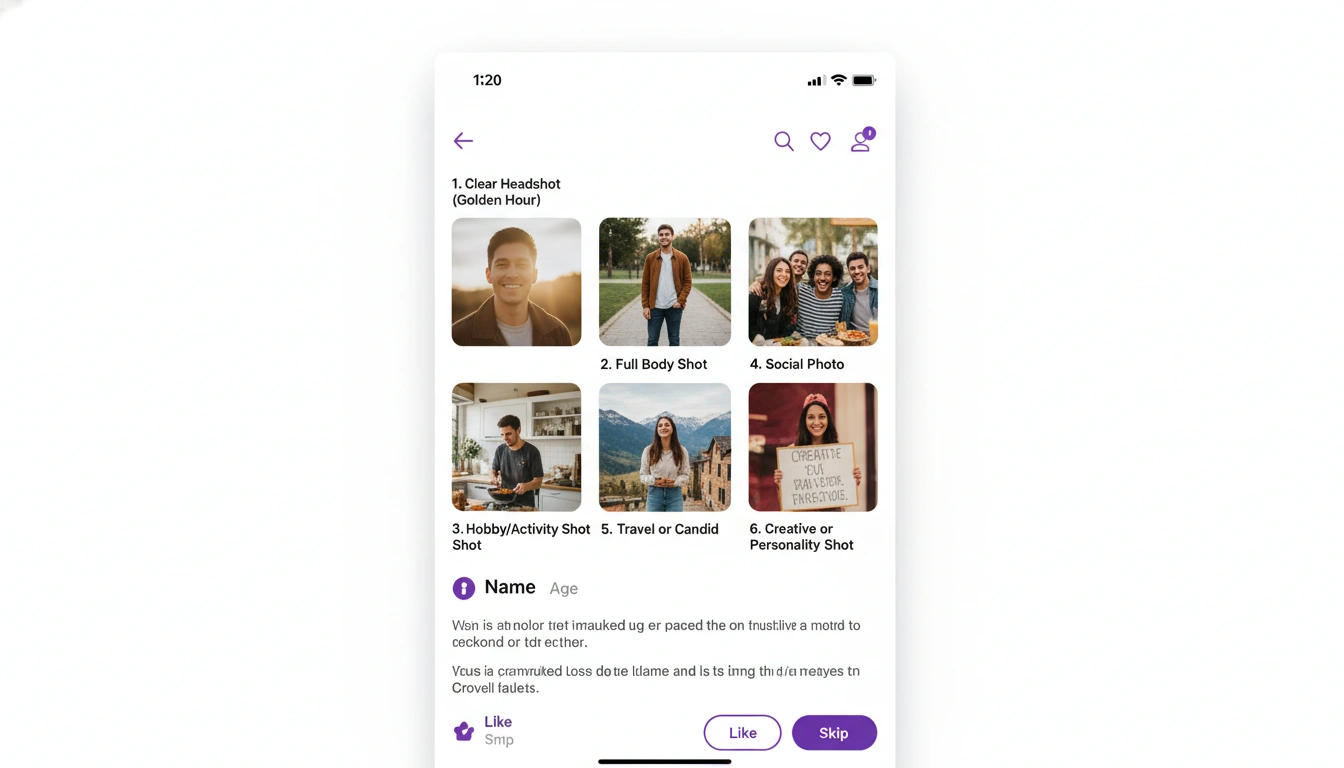
Your profile is a visual storyboard. The objectively best lineup requires: (1) a clear, smiling headshot to build immediate trust, (2) a full-body photo for physical transparency, (3) two lifestyle shots showing your hobbies, (4) one social photo proving you have friends, and (5) a conversational hook. Don't guess which photos fit these slots. Run your camera roll through BestPick's free AI photo analyzer to find your highest-scoring images instantly.
The Brutal Reality of the Swipe Algorithm
Before we talk about lighting and angles, you need to understand how dating app algorithms treat your photos. Most major apps rank profiles with some form of engagement-based scoring, though the exact mechanics are proprietary and none of the platforms publish them.
When you create a new profile, the app shows your card to a sample group of users. If a high percentage of them swipe left on your first photo, the algorithm assigns you a low "desirability score." Once that happens, the app stops showing your profile to highly sought-after users. You are effectively buried at the bottom of the deck.
A Passport Photo Online study on dating profile photos found that profiles with professionally taken photos tend to receive more matches and more first messages. But here is the critical nuance: "professionally taken" does not mean a corporate studio headshot. It means photos that utilize the core principles of professional photography: great lighting, clean backgrounds, and authentic emotion.
The 7 Profile Killers (Ranked by Negative Impact)
You cannot optimize your profile until you stop bleeding matches. The data is completely unforgiving about certain types of photos. If you have any of these in your top three slots, you are actively hurting how often your profile gets shown.
1. The Bathroom Selfie
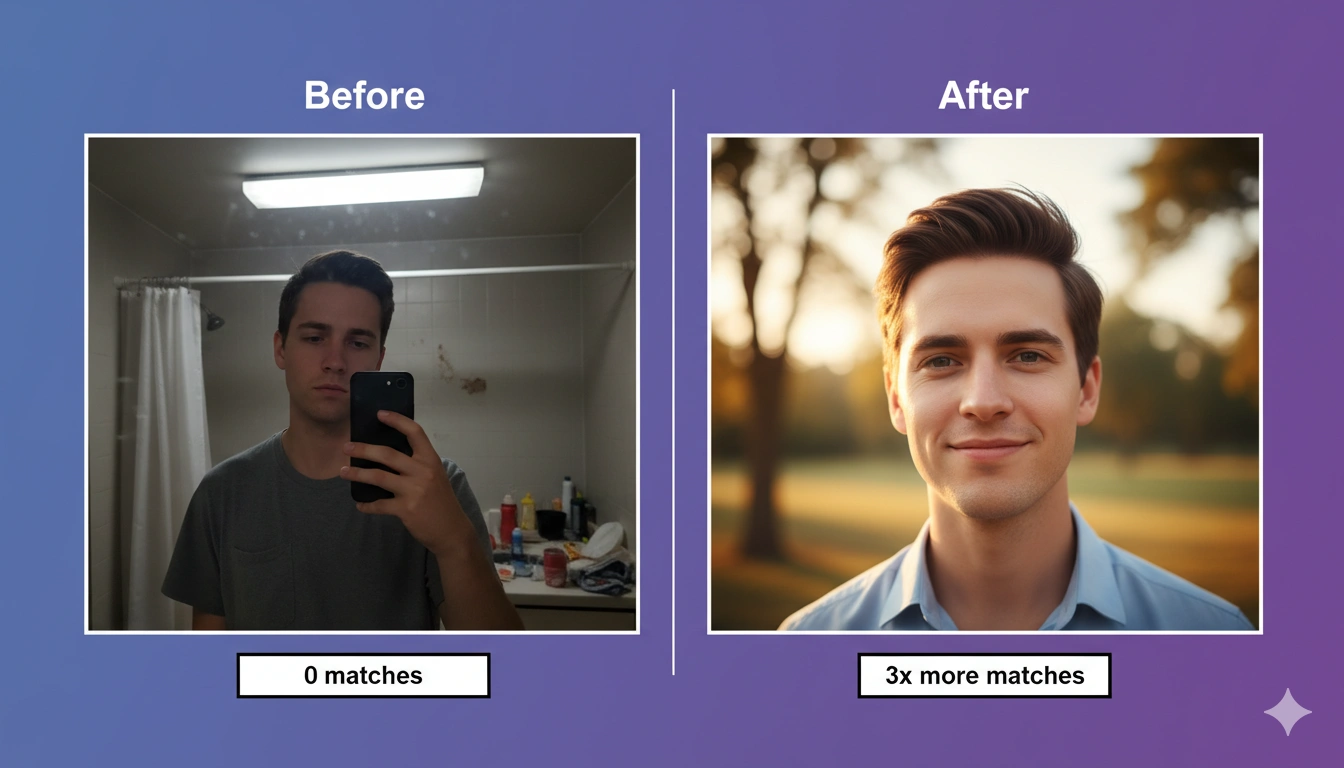
Hinge's published data reports that bathroom selfies receive about 90% fewer likes than other photo types. Think about the psychology here. A bathroom selfie signals low effort. The lighting is almost universally terrible, casting dark shadows over your eyes. And the background is literally a place where humans defecate. Why would you want your first impression to be associated with a toilet or a dirty mirror? Delete them immediately.
2. The "Where's Waldo?" Group Photo
Never, ever use a group photo as your lead image. When a stranger sees your profile, they give it only a moment. If they have to play a guessing game to figure out which person you are, they will not bother. They will just swipe left. A group lead photo also gives the viewer no clear anchor — they have to spend effort working out which face is the subject, and effort is the opposite of a strong first impression.
3. Hiding Behind Sunglasses
One photo with sunglasses is fine later in your lineup (it shows you go outside). But if you hide your eyes in your primary photos, you kill trust. Human beings are hardwired to look at eyes to determine someone's intent and emotional state. When you block your eyes, you trigger a subconscious "danger/hiding" alert in the viewer's brain.
4. Synthetic AI and Heavy Filters
In 2026, people are exhausted by fake imagery. Photos perceived as heavily edited, filtered (Snapchat dog ears, aggressive skin smoothing), or clearly AI-generated tend to have a negative impact. The goal of a dating profile is to meet someone in real life. If you look like a blurred-out synthetic avatar, the viewer immediately assumes you are insecure about your actual appearance.
5. The "Tough Guy / Cool Girl" Scowl
For some reason, many users (particularly men) think looking stoic, unbothered, or slightly angry makes them look mysterious and attractive. The data violently disagrees. Profiles built around genuine smiles score consistently higher on expression. People want to date someone who looks fun, warm, and safe to be around. A scowl reads as arrogant or emotionally unavailable.
6. The Nostalgia Trap (Photos Older Than 12 Months)
This is the cause of the "First Date Disappointment Metric." Passport Photo Online found that most daters have gone on a date where the person looked noticeably older or heavier than their photos. Even if you think you haven't changed since 2023, you have. Showing up looking different than your photos is essentially light catfishing, and it ruins the vibe of the date in the first five seconds.
7. The Gym Flex / Car Selfie
If fitness is a huge part of your life, you absolutely should show your body. But standing in front of a gym mirror lifting your shirt reads as incredibly narcissistic. Instead, have a friend take a photo of you crossing a finish line, hiking, or playing beach volleyball. Show your physique *in motion*, not flexing in a mirror. Similarly, car selfies just scream "I have nowhere else to go and nobody to take a photo of me."
The Perfect 6-Photo Storyboard
Think of your profile as a movie trailer. You don't want to show the exact same scene six times in a row. Six selfies taken from the exact same angle in your bedroom tells the viewer absolutely nothing about your life.
Apps like Bumble and Hinge are built around a 6-photo grid. If you follow this exact structural sequence, you will objectively maximize your conversion rate.
Slot 1: The Trust Builder (The Golden Headshot)
This is your anchor. The sole purpose of this photo is to make the viewer stop scrolling and think, "Okay, they are attractive and look friendly." The framing should be mid-chest up. Your face should occupy roughly 60% of the frame. You must be looking directly into the camera lens with a genuine, warm smile. The background should be slightly blurred (use Portrait mode) so nothing distracts from your eyes.
Slot 2: Physical Transparency (The Full-Body Shot)
You must include a full-body shot early in your profile. Without one, viewers will automatically assume you are hiding your physique. Yes, including a full-body shot might lower your *total* match count, but it dramatically increases your *quality* match count. You only want to match with people who are genuinely attracted to what you actually look like.
Slots 3 & 4: The Lifestyle Evidence
These photos prove you actually do things. If your bio says "I love the outdoors and trying new food," these photos need to be visual proof. One shot of you hiking, skiing, or walking your dog. One shot of you at a cool restaurant, a concert, or an art gallery. The best lifestyle photos are candid—you are looking away from the camera, engaged in the activity, completely naturally.
Slot 5: The "I'm Normal" Social Proof
A single photo with friends (placed deep in the lineup so there's no confusion about who you are) serves a vital psychological function. It proves you are socially calibrated. It shows that other humans tolerate and enjoy your company. *Pro Tip: Ensure you are clearly the focal point of the group, and ideally, look like you are having the best time out of everyone in the shot.*
Slot 6: The Conversational Bait
Your final photo should make it incredibly easy for the other person to send the first message. Bumble requires women to message first; Hinge requires someone to leave a comment. Give them an easy alley-oop. A photo of you in an exotic travel location, holding a weird object, wearing a ridiculous Halloween costume, or playing with an exotic animal gives them an immediate hook. *"Wait, where was that taken?"* is the easiest opener in the world.
The Secret Weapon: Focal Lengths and Lighting
Why do you look terrible in selfies but great in the mirror? It's not your face; it's physics.
The front-facing camera on a smartphone uses a wide-angle lens (typically around 24mm to 28mm). Wide-angle lenses distort whatever is closest to the lens. Because you are holding the phone an arm's length away, your nose is closest to the lens. The selfie camera literally stretches your nose and flattens your ears, making your face look mathematically distorted.
The Fix: Stop taking selfies. Have a friend stand 6 to 8 feet away from you and use the main rear camera, zoomed in slightly to roughly 50mm (or 2x zoom). The 50mm to 85mm focal range compresses facial features, resulting in a portrait that actually looks like the real you.
Once you fix the lens distortion, you have to fix the light. Professional photographers obsess over lighting because it shapes bone structure.
- ■ Never use direct overhead light. Fluorescents cast dark shadows in your eye sockets, making you look like a tired raccoon.
- ■ Find window light. Stand facing a large window during the day. The soft, diffused light fills in wrinkles and illuminates your eyes.
- ■ Exploit the Golden Hour. The 60 minutes just after sunrise or just before sunset provides warm, directional light. Turn your body so the sun is hitting one side of your face at a 45-degree angle. This casts a soft shadow on the other side of your face, instantly giving you a sharper jawline and cheekbones.
How to Stop Guessing (The AI Advantage)
The hardest part of this entire process is fighting your own brain. As we covered in our deep dive on photo selection psychology, you are biologically incapable of judging your own face objectively. You will instinctively choose the photo where you think your nose looks smallest, completely ignoring the fact that your smile looks totally fake.
You can ask your friends, but they are biased too. They look at a photo and remember the fun trip to Vegas; they don't see the dark shadows obscuring your eyes.
This is why we built BestPick. You need the ruthless objectivity of a stranger, applied instantly. Our AI engine applies a rubric built from published research on photo performance. It doesn't care about your insecurities. It scans your photos for Duchenne smiles, optimal lighting gradients, eye contact, and compositional balance.
Audit Your Profile Right Now
Don't let a terrible photo tank your algorithm score for another week. Upload your top 5 camera roll photos to BestPick. We will instantly rank them, tell you which one to put in Slot 1, and explain exactly why.
Analyze My Photos for Free →
About the Author
Saad Sellami is the founder and lead engineer at BestPick, where he designed the photo-scoring rubric and the analysis pipeline behind it. He writes about computational photography and the digital first impressions of profile photos.