In 2026, searching "AI headshot" returns dozens of tools that will generate professional-looking photos of you from a handful of uploaded selfies, usually for $10–$40. They are fast, increasingly realistic, and often impressive — but they produce something fundamentally different from what most people actually need.
This article explains exactly what each technology does, where each one genuinely helps, where each one fails, and which one you should use based on your actual situation. It is written by the founder of BestPick — an AI photo selector, not a generator — so I will be transparent about where generators are the right tool and where they are not.
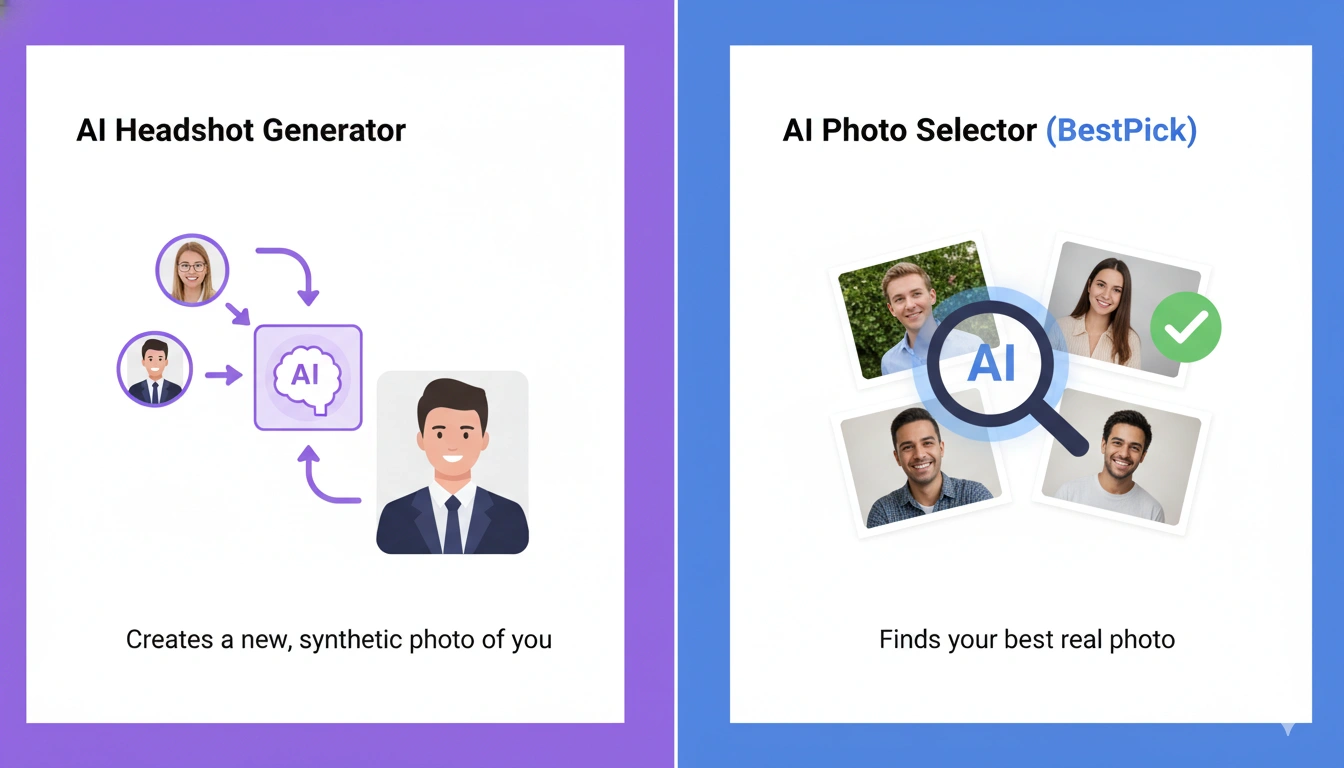
An AI headshot generator creates a new synthetic photo of you. An AI photo selector like BestPick analyzes your existing real photos to find the best one. One invents; the other evaluates. They solve different problems.
What AI Headshot Generators Actually Do
AI headshot generators — tools like HeadshotPro, Aragon AI, and PhotoPacks.AI — work by training a model on 10–20 photos you upload. The model learns your facial geometry, skin tone, and features, then synthesizes entirely new portraits of you in studio environments, professional outfits, and controlled lighting that may never have existed in front of a real camera.
The technology has improved significantly. High-quality generators in 2026 produce results that are often indistinguishable from a $300 studio session at a glance. The best tools deliver photos in under two hours for a cost of $20–$40.
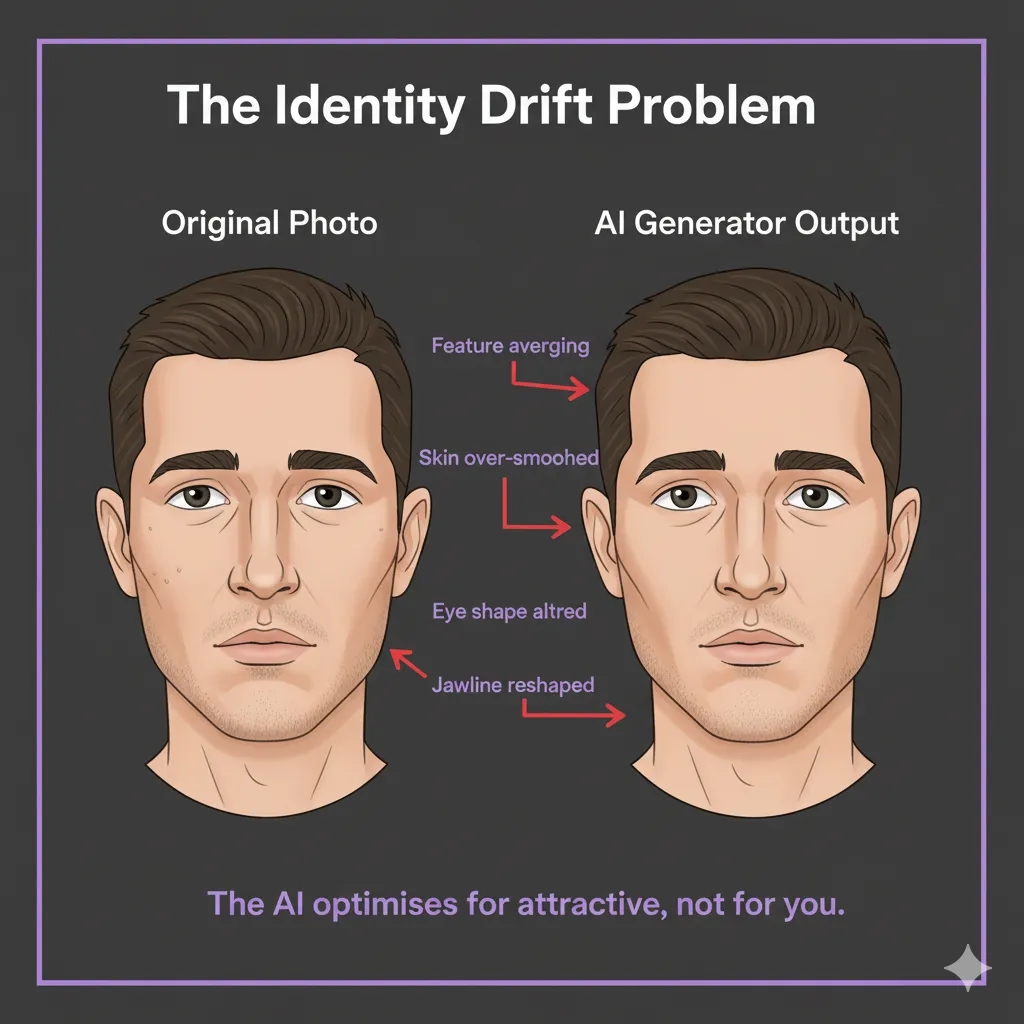
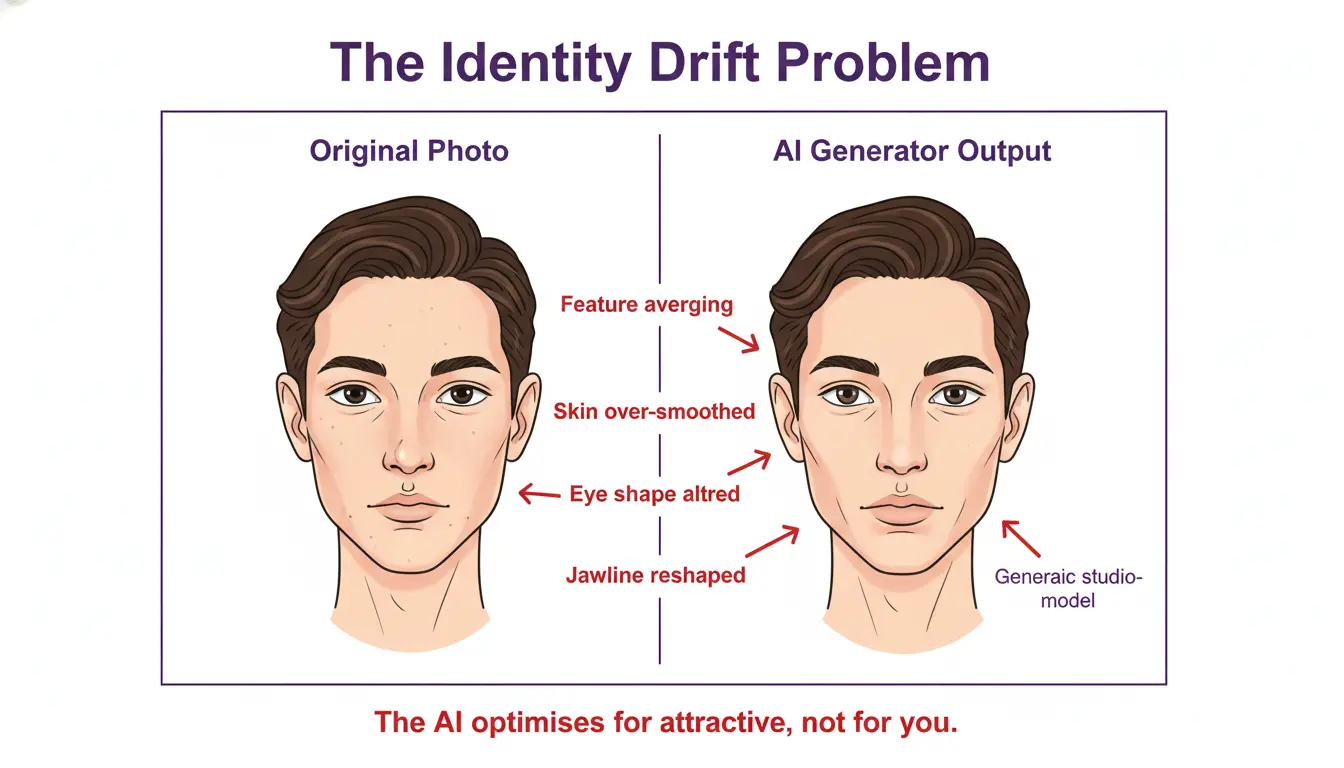
But they have a consistent and well-documented limitation: identity drift. Most generators are optimized to produce a "good-looking professional photo" — not specifically a photo that looks like you. The most common complaint across every major review platform is: "it looks professional, but it doesn't look like me." The AI tends to average your features toward a more symmetrical, generically attractive face, correct perceived asymmetries you might actually want preserved, and apply studio lighting that subtly reshapes perceived facial structure.
What AI Photo Selectors Do
AI photo selectors work with your existing real photos — the ones already on your phone from events, trips, everyday life — and use computer vision analysis to identify which photo will perform best for a specific purpose.
BestPick, specifically, evaluates each uploaded photo across multiple dimensions: the quality and directionality of the lighting, the authenticity of the facial expression (genuine Duchenne smile vs. posed grin), the clarity and appropriateness of the background, the composition and framing quality, and a set of platform-specific signals — what works for LinkedIn is different from what works for a dating app or Instagram.
The output is not a new photo. It is an identification of which of your existing photos will create the strongest impression for your goal, along with a written explanation of why — what specific elements made it the winner and what could be improved in your next photo session.
The Head-to-Head Comparison
| Dimension | AI Headshot Generator | AI Photo Selector (BestPick) |
|---|---|---|
| What it produces | Synthetic new photo of you | Your best existing real photo |
| Cost | $8–$40 per pack | Free |
| Time required | 15 min – 2 hours | Under 10 seconds |
| Identity accuracy | Variable — best tools are close, many drift | Perfect — it is your actual photo |
| Dating apps | Risky — creates first-date trust gap | Ideal — optimizes for match signals |
| Acceptable — use identity-preserving tools | Ideal — finds your best real professional photo | |
| Social media | Awkward — followers notice inconsistency | Ideal — keeps your authentic presence |
| Best for | No good real photos exist; corporate team standardization | Everyone with a phone camera and existing photos |
When to Use an AI Headshot Generator
There are genuine use cases where an AI headshot generator is the right tool. Be honest about whether you are in one of them:
You genuinely have no usable professional photos and cannot take new ones. If you have searched your phone and the best photo you have is a group shot from 2022 where someone cropped out your ex, a generator may produce better results than your current options.
You need standardized team headshots quickly for a corporate directory. Enterprise tools like HeadshotPro can produce consistent, on-brand headshots across an entire team without coordinating individual photo sessions — a legitimate efficiency gain.
The output will be used in contexts where people do not know what you look like. A generated headshot for a new platform where you have no existing presence is lower-risk than on LinkedIn where your recruiter will recognize your face (or not).
When to Use BestPick (AI Photo Selector)
BestPick is the right tool in the majority of real-world situations, for one fundamental reason: most people already have a great photo somewhere on their phone — they just cannot identify it objectively, because they are too familiar with their own face to evaluate it the way a stranger would.
If you are updating your dating profile, your LinkedIn, your Instagram bio, or any platform where people who already know what you look like will see the photo — use BestPick. Upload your candidates (3–8 photos is ideal), select your goal, and receive an objective AI recommendation with written reasoning in under 10 seconds.
There is no identity drift, no synthetic face, no "doesn't look like me" problem — because it is your actual face, your actual expression, your actual life. BestPick simply identifies which one of your real photos communicates those things most effectively.
The Trust Problem with AI-Generated Photos
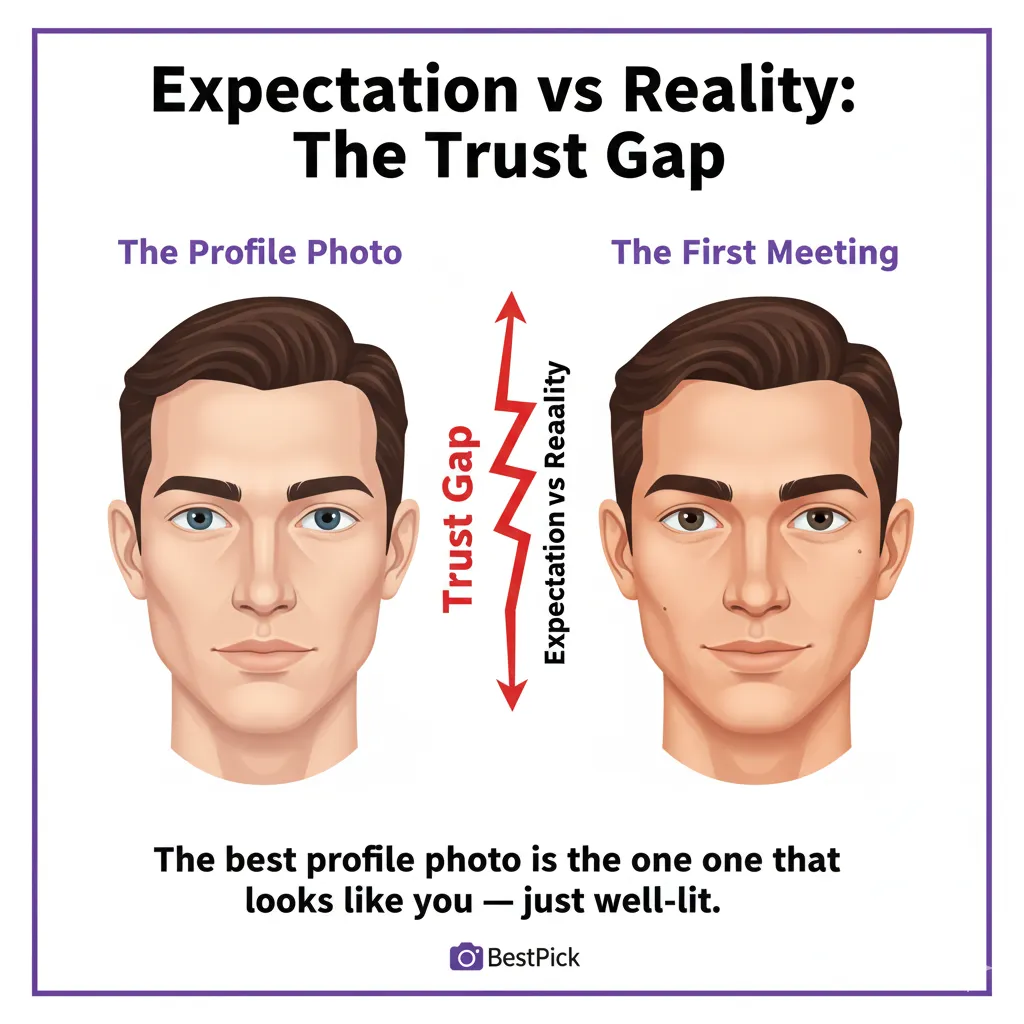
The deepest issue with AI headshot generators in contexts that involve eventual human interaction — dating, job interviews, professional networking — is the trust gap created when someone meets you and you look different from your photo.
This is not about being "less attractive" in person. It is about the specific misalignment created when a photo was optimized by an AI toward generic attractiveness rather than authentic self-representation. A ScienceDirect review of 86% of studies on online dating found that photos perceived as artificially edited had a significant negative impact on match quality and conversion to actual dates. Recruiters have begun explicitly discussing AI-generated LinkedIn headshots as a red flag when the photo clearly does not match the candidate's video call appearance.
The fundamental purpose of a profile photo is to build trust with a stranger before you meet them. A synthetic photo — however well-made — undermines that purpose at its foundation.
My Recommendation as BestPick's Developer
I built BestPick because I noticed that the hardest part of choosing a profile photo is not taking the photos — it is evaluating them objectively after they are taken. The selection problem is where most people lose outcomes that better photos would have delivered.
If you are going to use an AI headshot generator, use one of the identity-preserving, training-based tools (PhotoPacks.AI, BetterPic, or HeadshotsByAI are among the better options at the time of writing) and be realistic about whether the output actually looks like you before publishing it.
But if you have a phone and any existing photos — try BestPick first. It is free, it takes under 10 seconds, and it will tell you objectively whether you already have a great photo hiding somewhere in your camera roll. Most people do.
Frequently Asked Questions
Already Have Photos? Let AI Find Your Best One — Free.
No generators. No fake faces. Upload your real photos, pick your platform, and get an instant AI recommendation for which photo will perform best. Zero cost, zero account needed.
Analyze My Photos Free →